Informazioni relative al progetto
client
PFC S.r.l.
TYPE OF INTERVENTION
Refurbishment
LOCATION
Milano
DURATION
2020-2023
SERVICES
- Final Design
- Executive Design
- Specialist Works Supervision for Building Services
- LEED Sustainability Certification
- Energy Performance Certificate — APE
Value of the Designed Building Services Works:
|
IA.01: |
226.071,69 € |
|
IA.02: |
471.859,21 € |
| IA.03: |
452.530,30 € |
| IA.04: |
193.941,56 € |
Project Description
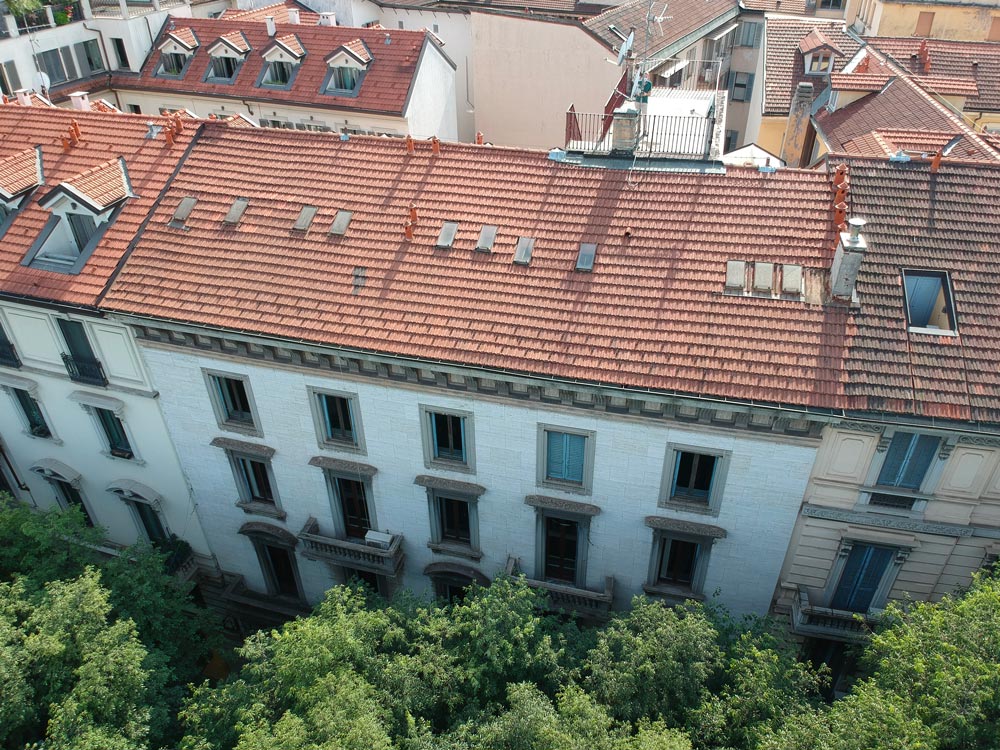
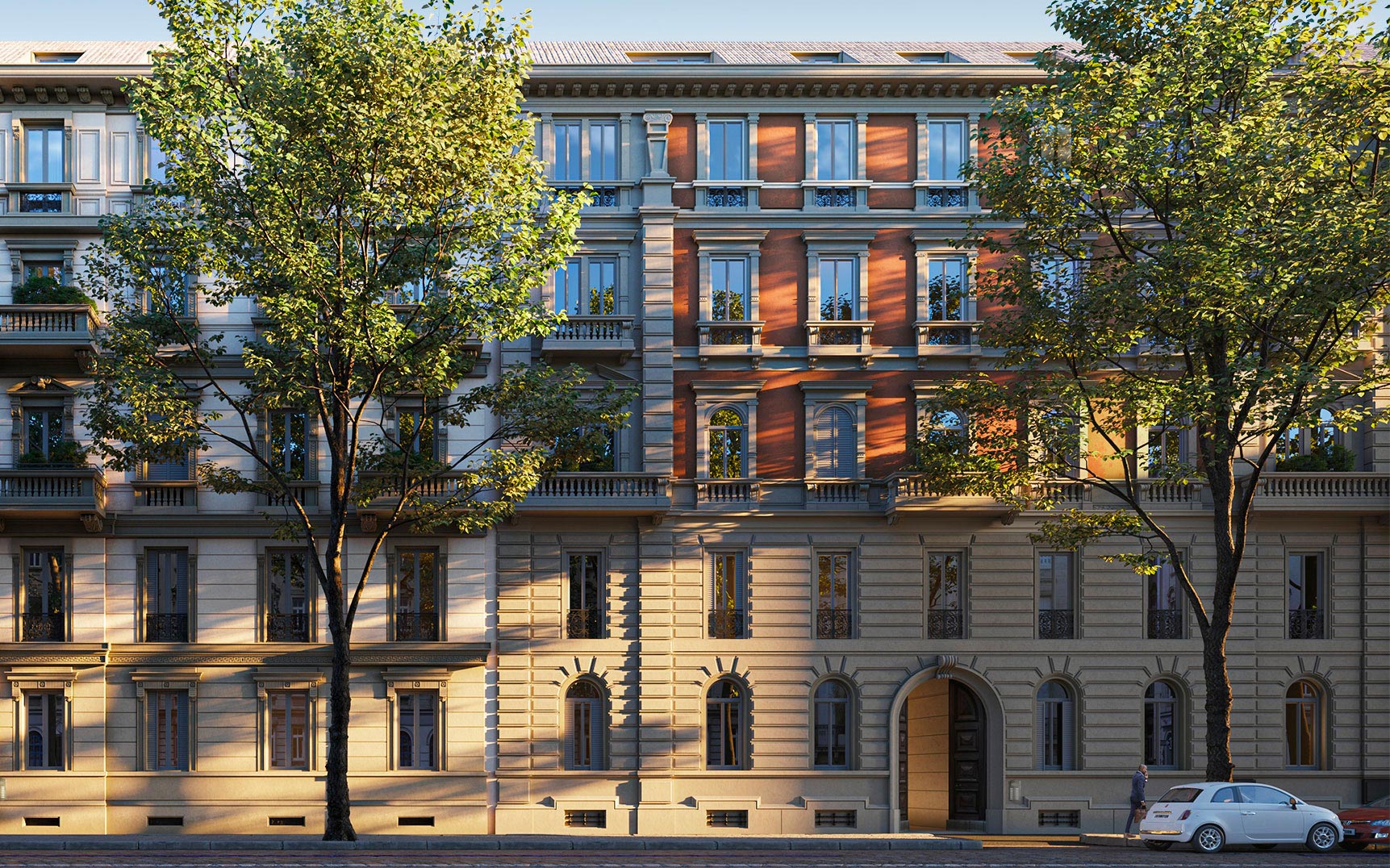
This project concerns the building services refurbishment connected to the renovation and extension of the real estate complex located at Via Foro Buonaparte 60, Milan.
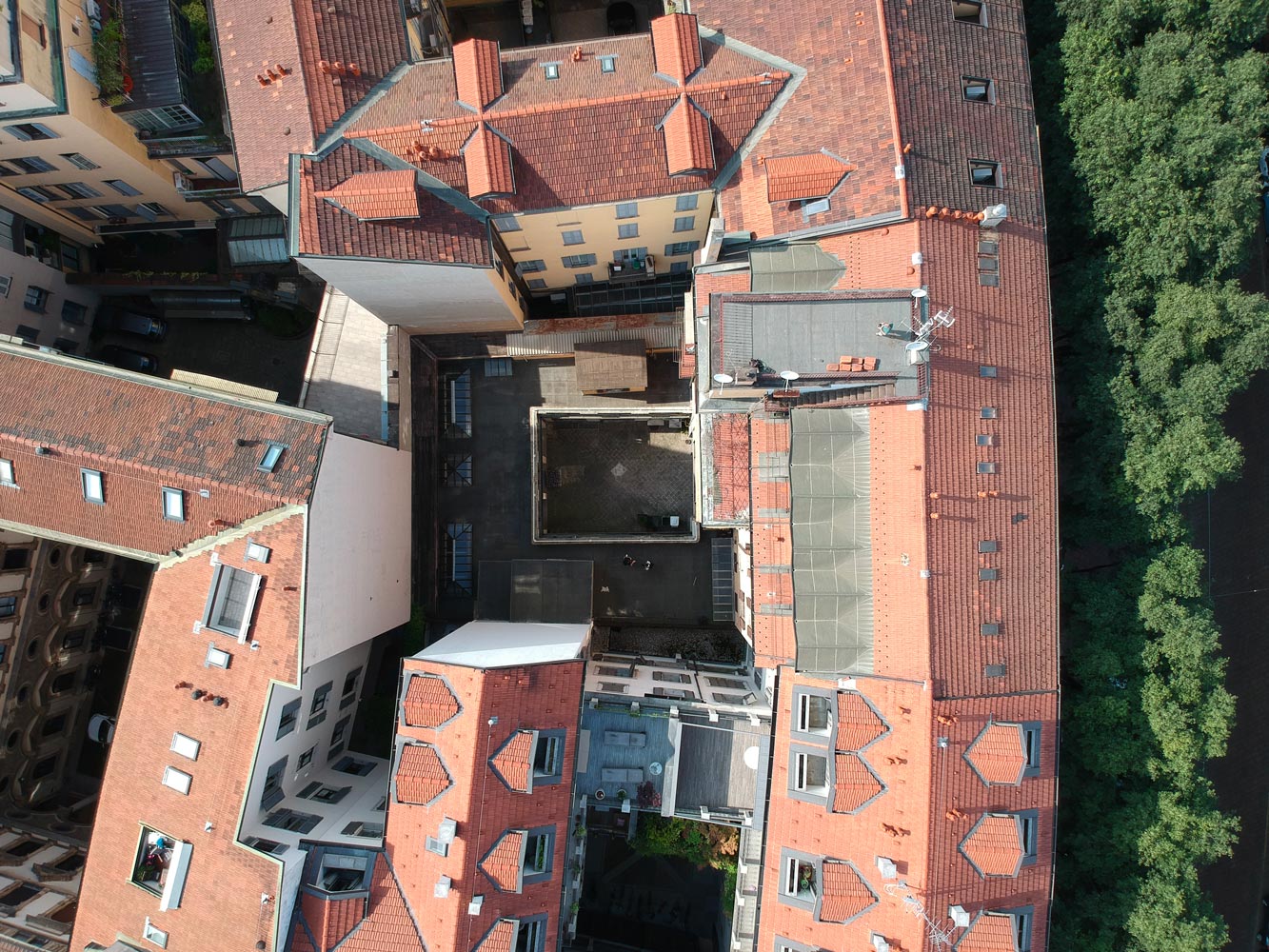
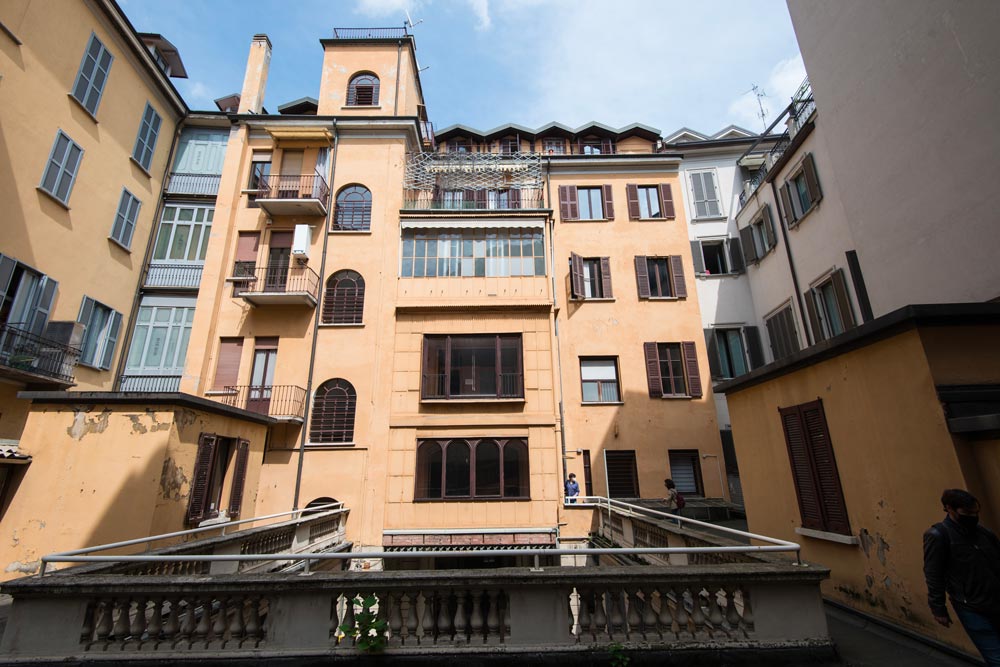
The building will have a mixed use, with areas intended for offices and restaurant activities. The street front on Via Foro Buonaparte consists of 5 above-ground floors, while the portion of the building overlooking only the internal courtyard consists of 3 above-ground floors.
With the exception of the ground floor, which will be used for restaurant activities, all the other above-ground floors will be intended for office use. The basement level will be dedicated to technical rooms and/or storage areas.
The intervention will include the following systems:
- summer and winter air conditioning system;
- plumbing system for cold water and domestic hot water supply;
- wastewater and rainwater drainage system;
- fire protection water system with hydrants/extinguishers;
- automatic regulation and supervision system;
- electrical system serving the mechanical systems;
- irrigation system.
At the end of the works, the Contractor shall provide all the documentation required in accordance with the General and Special Tender Specifications, including the operation and maintenance manual for the mechanical systems.
Description of Mechanical Systems
The systems refurbishment involves the complete renovation of the air conditioning systems.
The air conditioning system will be designed to achieve significant optimisations in terms of energy consumption through the adoption of the following strategies:
- use of renewable or equivalent energy sources, with heating and cooling production from an aerothermal source;
- selection of technologies with higher efficiencies than traditional solutions, such as heat production through heat pumps and heat recovery units on exhaust air.
The systems will be designed to achieve the objectives related to energy consumption reduction, while still ensuring fundamental requirements such as:
- maintaining internal comfort conditions in the rooms, according to the intended uses;
- reliability;
- flexibility;
- ease and cost-effectiveness of management.
For the entire building, air conditioning will be provided by a direct-expansion refrigerant gas system, heat recovery type VRF, with air-cooled outdoor units.
The indoor areas will be air-conditioned by ducted units installed in the false ceiling, or by floor-standing/cabinet units where ceiling installation is not possible.
In addition, heat recovery VRF technology allows the indoor units to operate simultaneously in heating or cooling mode, regardless of the season and of the overall operating mode of the system.
Primary fresh air renewal will be provided by air handling units dedicated to each space, positioned in the false ceilings and distributed through ductwork on each floor of the building.
Each toilet block will be equipped with suitable room air extraction.
Plumbing and Fire Protection Systems
As regards the plumbing systems, the building is already connected to the municipal drinking water network. The connection will be maintained in the same position and will supply the new water plant room.
Domestic hot water production will be centralized, with storage, and produced through a direct-expansion VRF system, with metering by service. Alternatively, independent production may be provided through heat pump water heaters.
The mixed fire protection water system, consisting of hydrants and hose reels, will be supplied by an electric pump unit connected to the water supply through a pre-autoclave system.
Description of Electrical Systems
The building is planned as a multi-tenant property.
In order to guarantee the required Low Voltage supplies, the utility provider has requested a dedicated room for transformation purposes.
As regards telecommunications systems, an area has currently been prepared where fibre optic and copper distribution boxes from the various providers may be installed. These providers will be contacted over time by the individual tenants.
Four different types of electrical panels are planned within the building:
- delivery protection panels;
- tenant floor panels;
- common area panels;
- air conditioning panels.
The electrical distribution system within the building will be divided into main distribution and secondary distribution.
The main electrical distribution will be carried out using multipolar CPR conductors installed in:
- closed, non-perforated cable trunking for the internal horizontal and vertical sections;
- underground cable ducts running through the internal courtyard.
The secondary electrical distribution, starting from the zone distribution panels, will be carried out using multipolar CPR conductors and/or unipolar CPR conductors, installed according to the architectural and civil finishes of the rooms, in:
- concealed corrugated conduits in the floor screed and/or walls, for connection to recessed distribution boxes and/or electrical outlet boxes;
- closed, non-perforated cable trunking for the horizontal sections where false ceilings are present.
The electrical systems refurbishment will also include the installation of a new lighting system.
Power supply systems will be provided for:
- mechanical air conditioning systems;
- service socket systems;
- mechanical systems for domestic hot water production;
- mechanical systems serving the technological plant rooms;
- power supply systems serving the common areas, such as lifts, disabled access platforms, sockets for the reception/workstation area, entrance hall and other shared services.
Special Systems, Safety and Photovoltaic System
An EVAC sound diffusion and safety alarm system will be installed, sized by considering the spaces as open-plan areas.
A fire detection system is also planned, with smoke detection covering all the areas included in the intervention.
As a consequence of the fire risk assessment, a two-way communication system has also been planned, connecting the refuge areas distributed across the floors with the reception desk. In the event of intervention by the Fire Brigade, this system will allow the firefighter responsible for the evacuation of the building to operate in a coordinated manner.
For the energy efficiency improvement of the area subject to refurbishment, a photovoltaic system has been positioned on the roof.
The system will be designed to produce electricity in connection with the Low Voltage alternating-current distribution grid, with an indicative peak power of approximately 6 kWp, through the use of 15 photovoltaic panels with a nominal power of 400 Wp each.